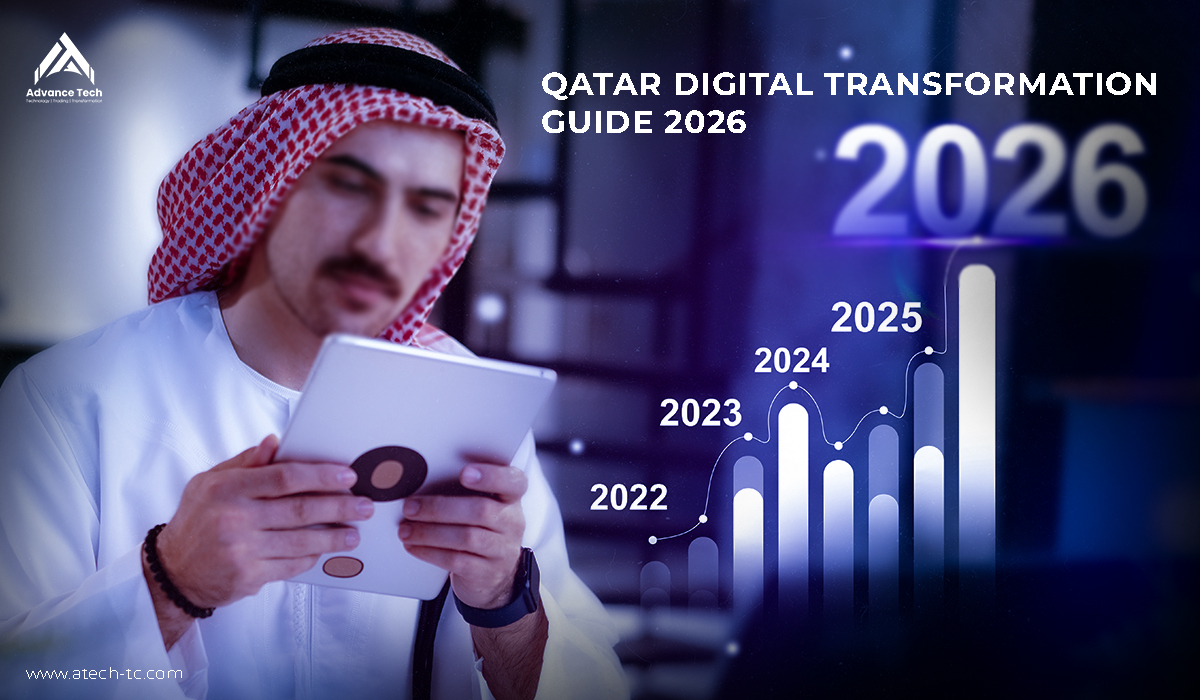
The business landscape in Doha is changing fast. We have reached a critical year in the timeline for the Qatar National Vision 2030.The year 2026 marks a specific turning point. Digital strategy is no longer just a plan on paper. It is now an operational necessity for every major enterprise.
For Chief Technology Officers and procurement leaders in Qatar the challenge is clear. It is not about why you should digitize. The question is how to do it securely.
The Ministry of Communications and Information Technology has set strict standards. New data privacy laws are now fully active. Global tech giants have opened local cloud regions here in Doha.
This article analyzes the roadmap for digital transformation in Qatar for 2026. It provides a practical path for decision makers who must navigate these changes safely.
What Defines the Digital Landscape in Qatar for 2026?
The trajectory for 2026 is defined by the national Digital Agenda. This framework pushes for a knowledge based economy. It relies on a secure and modern infrastructure.
Three specific factors will dictate your IT strategy this year.
1. The Reality of Data Sovereignty
The National Data Privacy Law has changed how businesses handle information. You cannot store sensitive customer data on foreign servers anymore.
Cross border data transfer now requires strict legal protocols. By 2026 this is a commercial requirement as much as a legal one.
Clients expect their data to reside within Qatar. This shift forces organizations to update their storage strategies. You must move toward local data centers or approved local cloud regions.
2. The Integration of TASMU Smart Sectors
The TASMU Smart Qatar Program has moved beyond the pilot phase. We are seeing full adoption in healthcare and logistics.
This national ecosystem connects government entities with private companies. Your systems must be ready to integrate with these platforms.
A logistics company needs to feed data into smart transport grids. A private clinic must interface with national health records. Digital isolation is now a major operational liability.
3. Cybersecurity as a Compliance Standard
The National Cyber Security Agency has increased its oversight. Security measures are not optional add ons. They are prerequisites for doing business.
This applies to every layer of your architecture. It ranges from securing end user devices to ensuring proper data disposal. You must build security into the fabric of your IT network.
How Should You Evaluate a System Integrator in Doha?
Selecting a technology partner is a major risk factor. The market is crowded with vendors.
Many agencies claim expertise in digital transformation consulting. However few have the local infrastructure to support enterprise needs.
You need to evaluate potential partners using strict criteria.
Do They Understand Local Compliance?
Global standards are important. But they do not always align with local regulations.
A generic software solution might violate specific data residency laws in Qatar. Your partner must demonstrate deep knowledge of MCIT regulations.
They should know how to configure systems that satisfy NCSA security standards. Ask them specific questions about recent regulatory changes. Their ability to answer details is a strong sign of competence.
Is Their Supply Chain Genuine?
The hardware market suffers from a flood of grey market products. These are items sold through unauthorized channels.
Grey market hardware often lacks a valid warranty in Qatar. This poses a significant risk to your business continuity.
Imagine if a critical server fails. If the manufacturer refuses support because of the product origin your operations halt.
You must verify that your partner is an Authorized Distributor. Ask for official certificates. A legitimate partner has direct support lines with the brands they represent.
Can They Bridge Legacy and Cloud?
Most established enterprises in Qatar are not starting from scratch. You likely have legacy infrastructure in place.
You cannot simply discard these systems. A competent integrator understands this reality. They do not just sell new cloud solutions.
They engineer hybrid architectures. This allows your existing on premise systems to communicate securely with modern platforms.
Which Technologies Will Drive ROI in 2026?
Real transformation requires a clear Return on Investment. For 2026 the focus shifts from experimental tech to practical tools.
We are seeing a renewed focus on specialized hardware. This infrastructure supports specific industry needs and drives efficiency.
Industrial Mobility and Field Digitization
Qatar presents a unique physical environment. High temperatures and dust are constant factors.
Standard consumer electronics often fail in these conditions. This is a major issue for sectors like construction or oil and gas.
We see a massive shift toward rugged computing in 2026. Field engineers in Ras Laffan cannot rely on fragile laptops.
They require industrial tablets that withstand drops and heat. These devices allow real time data entry from the field. This eliminates paper trails and reduces errors significantly.
The Internet of Medical Things (IoMT)
Healthcare is digitizing rapidly in Qatar. The focus is on patient safety and data accuracy.
This transformation extends to the peripherals used by medical staff. Standard keyboards are difficult to sanitize. They can become breeding grounds for bacteria.
Hospitals are upgrading to medical grade input devices. These tools feature smooth surfaces for easy disinfection.
They often include built-in biometric security. This protects patient data at the point of care while maintaining strict hygiene.
Secure Data Lifecycle Management
Digital transformation creates massive amounts of data. It also creates a need to destroy that data securely.
Devices eventually reach the end of their life. Simply deleting files is not sufficient for compliance.
Hard drives retain data traces that bad actors can recover. Organizations in 2026 are investing in physical degaussing hardware.
This ensures that old servers do not become security leaks. Proper data destruction is the final step in a secure data lifecycle.
Why Advance Tech Is Trusted in Qatar
At Advance Tech we build trust through evidence. We do not try to be everything to everyone.
We focus on specific high value technologies. We have spent years supporting Qatar’s most critical sectors.
Here is why government entities and major enterprises partner with us.
We Are Authorized and Compliant
We hold official authorized distributor status for our brands. This includes Soten Hugerock for rugged industrial tablets.
We also represent KSI for healthcare security keyboards and ProDevice for data destruction. When you work with us you receive genuine products.
There are no warranty issues. There are no grey market risks. We ensure every piece of hardware complies with Qatari import standards.
We Specialize in Critical Sectors
Our team understands the unique pressures of strategic industries.
We provide infection control keyboards for healthcare facilities. We supply rugged tablets that function in the harsh summer heat.
We offer certified data destruction machines for banks and ministries. We ensure you meet the strict data disposal laws in Qatar.
We Provide Local Engineering Support
We are not a remote entity. Our office is located here in Doha.
Our engineering team is local. We provide installation and maintenance services directly.
We believe in a consultative approach. We do not just ship a box. We help you understand how the technology fits your architecture.
The Financial Impact of Smart Decisions
Investing in the right technology protects your budget. Cheap hardware often carries hidden costs.
A consumer tablet might cost less upfront than a rugged unit. But that consumer tablet will likely fail on a construction site.
It will require replacement and cause downtime. The rugged unit will last for years.
Similarly ignoring data disposal laws can lead to fines. The cost of a professional degausser is low compared to a data breach penalty.
Strategic procurement concentrates on Total Cost of Ownership. This is the thinking needed to achieve successful digital transformation in Qatar.
Next Steps for Your Infrastructure
You now understand the landscape for 2026. You see the regulatory pressures and the technological opportunities.
The next logical step is to assess your current gaps. Are your field teams equipped with the right tools?
Is your patient data secure at the point of entry? Do you have a compliant process for destroying old hard drives?
We can help you answer these questions with confidence.
Let us discuss how to secure your operations for 2026. Contact the Advance Tech engineering team today for a technical consultation regarding your specific hardware and compliance needs.
FAQs
1. What is digital transformation in Qatar for 2026?
Digital transformation in Qatar for 2026 focuses on secure cloud adoption, data sovereignty compliance, and integrating national platforms aligned with Qatar National Vision 2030.
2. Why is data sovereignty critical for Qatar businesses?
Qatar data privacy laws require sensitive data to be stored locally, making local data centers and approved cloud regions mandatory for enterprise compliance.
3. How can enterprises ensure cybersecurity compliance in Qatar?
Enterprises must follow National Cyber Security Agency (NCSA) standards by embedding security across networks, devices, and data lifecycle management.
4. What technologies drive digital transformation ROI in Qatar?
Rugged computing, healthcare-grade IT devices, and certified data destruction solutions deliver the highest ROI for Qatar’s regulated industries in 2026.