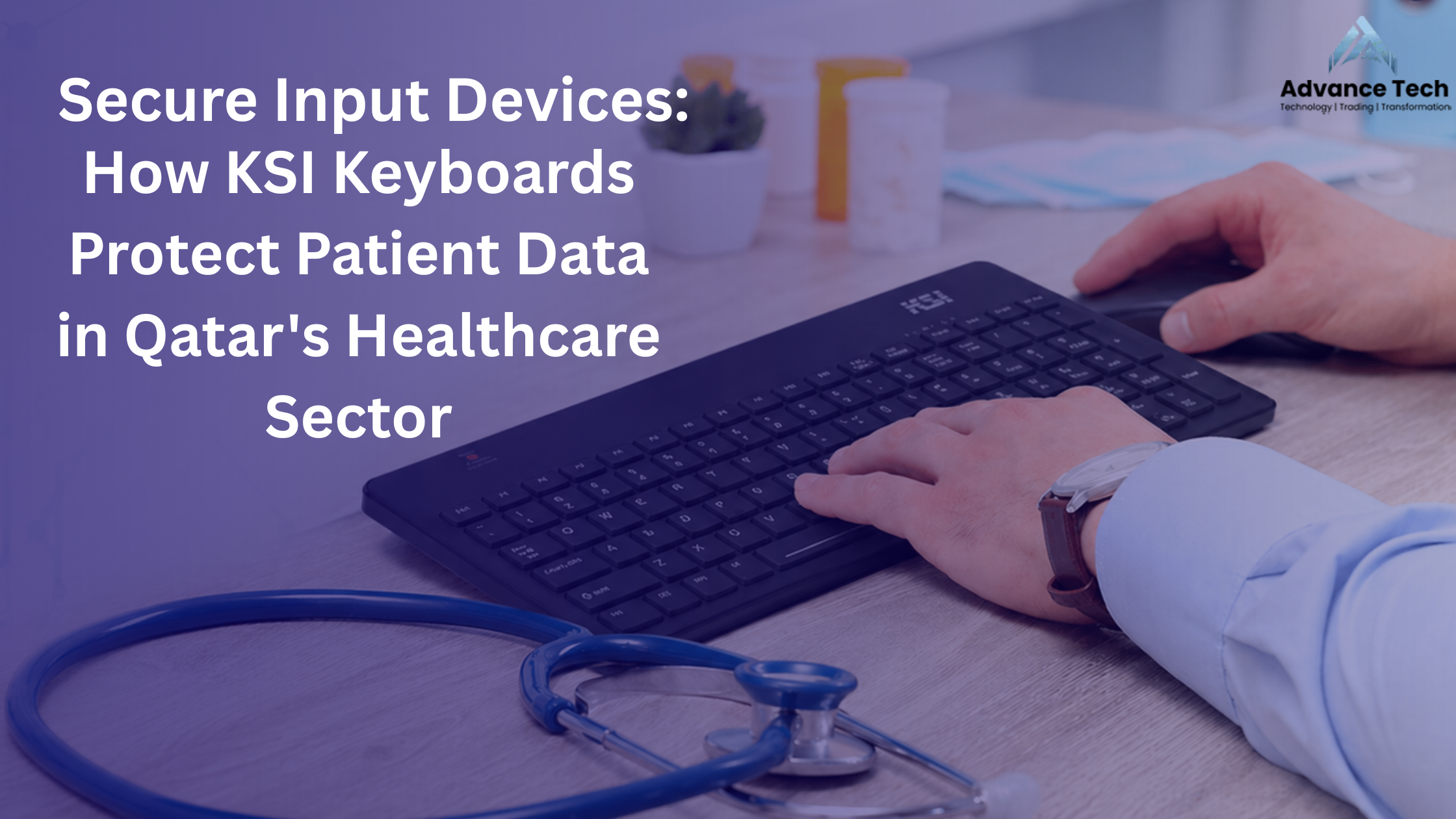
Qatar’s healthcare sector is one of the most digitally advanced in the Gulf region — and with that advancement comes a data security responsibility that extends to every device connected to a clinical network, including the one most healthcare IT teams historically overlook: the keyboard. As Qatar’s hospitals, diagnostic centres, and specialty clinics accelerate their adoption of electronic health record systems, integrated clinical workstations, and connected patient management platforms, the input device through which clinical staff access, enter, and retrieve sensitive patient data has become a genuine cybersecurity and data governance concern. For healthcare technology procurement teams and hospital IT managers evaluating their infrastructure in 2026, understanding how medical-grade KSI keyboards address patient data protection — and why the choice of input device matters to your facility’s overall data security posture — is no longer a peripheral conversation.
What are KSI Keyboards?
KSI (Keyboard Specialists Inc.) is an American manufacturer with decades of specialisation in designing and producing keyboards and input devices for medical, industrial, and high-security environments where standard commercial peripherals fail to meet the performance, durability, or security requirements of the deployment environment.
KSI keyboards are purpose-engineered input devices built to the exacting specifications of clinical and institutional environments — combining sealed, washable construction with hardware-level security features, robust connectivity options, and device management capabilities that standard commercial keyboards do not possess. In Qatar’s healthcare context, where patient data is protected under the Qatar National Health Data Governance Framework and where healthcare providers are increasingly subject to cybersecurity audit requirements, KSI keyboards represent a category of clinical infrastructure that contributes directly to both physical and digital patient data protection — making the role of certified KSI keyboard distributors in Qatar increasingly significant in healthcare IT procurement decisions.
Key Features & Benefits
Medical-grade KSI keyboards deliver a set of security, compliance, and operational features that position them as a meaningful component of a comprehensive patient data protection strategy in Qatar’s clinical environments:
- Hardware-Level Key Encryption Support: Select KSI keyboard models support hardware-based keystroke encryption — encrypting the signal between the keyboard and the host system at the device level, before data reaches the operating system layer where software-based keyloggers and interception tools operate. This capability protects credential entry and patient data input from a class of attack that software security measures alone cannot fully address.
- No Internal Data Storage or Onboard Memory: KSI medical keyboards are designed without internal data storage, onboard memory buffers, or firmware update ports that could be exploited as data exfiltration vectors or used to introduce malicious code into a clinical network through the peripheral layer — a documented attack surface in healthcare cybersecurity incident reports globally.
- Tamper-Evident Physical Construction: KSI keyboard housings are engineered with tamper-evident assembly features that make unauthorised physical modification — such as the installation of hardware keyloggers inside the keyboard chassis — immediately detectable during routine device inspection, supporting the physical security protocols that Qatar’s healthcare data governance requirements mandate for devices connected to patient data systems.
- Controlled Connectivity Profiles: KSI keyboards are available in USB HID-only configurations that restrict the device’s communication capability to standard keyboard input — eliminating the broad device class permissions of generic USB controllers that can be exploited to present a keyboard as a mass storage device, network adapter, or other unintended device class on a clinical network.
- Asset Management and Device Tracking Compatibility: KSI medical keyboards support integration with healthcare asset management systems through standardised device identification — enabling IT teams to maintain accurate inventories of connected input devices, detect unauthorised device substitutions, and enforce device lifecycle policies that are increasingly required under clinical cybersecurity governance frameworks.
Industrial Applications
KSI keyboards serve patient data protection requirements across the full spectrum of Qatar’s clinical and health-adjacent digital environments:
- Electronic Health Record Workstations where clinical staff enter, retrieve, and update sensitive patient records — the primary data entry point in any digital health environment and the location where keyboard-level security measures have the most direct impact on patient data confidentiality and integrity
- Pharmacy and Medication Management Systems where keyboard input governs access to prescription data, medication dispensing authorisation, and controlled substance tracking — environments where input device security intersects directly with both data governance and pharmaceutical regulatory compliance requirements
- Radiology and Diagnostic Imaging Information Systems where keyboards provide access to patient imaging records, diagnostic reports, and referral documentation — high-value data assets in Qatar’s healthcare system that require the same access control and input security rigour applied to primary clinical records
- Telemedicine and Remote Consultation Platforms where clinical staff access patient data through networked workstations in environments that may have different physical security profiles than core hospital facilities — making hardware-level keyboard security measures a valuable supplement to network-layer access controls
- Administrative and Insurance Processing Workstations handling patient identity data, insurance claim records, and billing information — data categories that carry significant privacy obligations under Qatar’s data protection framework and that are processed through keyboard input at high volumes across administrative departments
- Research and Clinical Trial Data Management Facilities where keyboards provide access to sensitive clinical trial participant data subject to both national health data governance requirements and international research ethics protocols — environments where data integrity and access control are subject to independent audit
How to Choose the Right One
Selecting KSI keyboards for patient data protection in Qatar’s healthcare environments requires a structured evaluation that addresses both the technical security capabilities of the device and the procurement and support infrastructure required to deploy it effectively:
- Assess Your Facility’s Specific Threat Profile: Not every clinical environment presents the same patient data security risk. High-security environments — pharmacy systems, executive health record access points, research data workstations — warrant keyboards with hardware encryption and the most restrictive USB connectivity profiles. Standard clinical workstations may be adequately served by models with tamper-evident construction and controlled USB HID profiles without full hardware encryption. Match the security specification to the threat level of each deployment zone rather than applying a single specification across all environments.
- Verify Compatibility with Your Electronic Health Record System: KSI keyboards must integrate seamlessly with your facility’s EHR platform, clinical workstation operating system, and any smart card or biometric authentication systems in use. Confirm driver compatibility, USB HID compliance, and — where smart card readers are integrated into the keyboard chassis — compatibility with your facility’s authentication token and card management system before finalising any specification.
- Confirm Alignment with Qatar’s Health Data Governance Requirements: Qatar’s National Health Data Governance Framework establishes requirements for the security of patient data processing environments. Confirm with your legal and compliance teams which specific requirements apply to input device specifications in your facility type, and verify that the KSI models you are evaluating can be documented as meeting those requirements as part of your compliance evidence portfolio.
- Evaluate Smart Card Reader Integration Options: Many Qatar healthcare facilities use smart card-based clinical authentication systems that require staff to present a card credential before accessing patient data on a clinical workstation. KSI produces keyboard models with integrated smart card readers that combine secure input with authenticated access in a single device — eliminating the separate card reader peripheral that represents an additional uncontrolled USB port on the clinical workstation.
- Confirm Distributor Support for Security-Critical Deployments: Input devices connected to patient data systems must be sourced from authorised, traceable supply chains — a requirement that applies to keyboard procurement as directly as it applies to server hardware or network infrastructure. Confirm that your distributor can provide device provenance documentation, authorised reseller certification, and supply continuity assurance appropriate for security-critical healthcare IT infrastructure.
Why Quality Matters
In healthcare cybersecurity, the weakest point in a data protection architecture is rarely the most obvious one. Hospitals invest heavily in network firewalls, endpoint detection software, and access control systems — and attackers increasingly look for the peripheral layer as the path of least resistance into a clinical network. A keyboard without hardware security controls, connected to a clinical workstation that holds patient records, is a documented attack vector — one that hardware keyloggers, malicious firmware, and USB protocol exploits have all been demonstrated to compromise in real-world healthcare settings globally.
Qatar’s healthcare sector is not immune to these threats. As the country’s health infrastructure becomes more digitally interconnected — integrating primary care, specialist services, diagnostic imaging, pharmacy, and insurance systems across national health networks — the attack surface for patient data exposure grows proportionally. Every device on that network, including every keyboard on every clinical workstation, is part of that surface.
Medical-grade KSI keyboards reduce this exposure through hardware-level design decisions — restricted connectivity profiles, tamper-evident construction, no onboard memory, and optional keystroke encryption — that software security tools deployed on the workstation operating system cannot replicate. For healthcare IT managers building defensible, auditable patient data protection architectures in Qatar in 2026, input device specification is a gap in the security perimeter that medical-grade keyboards close.
Conclusion
Patient data protection in Qatar’s healthcare sector is a system-level responsibility that extends to every device connected to a clinical network — including the KSI keyboards through which clinical staff interact with patient records, medication systems, and diagnostic platforms every minute of every shift. The hardware security features, controlled connectivity profiles, and tamper-evident construction of medical-grade KSI keyboards make them a meaningful and increasingly necessary component of a comprehensive clinical data security architecture in 2026. For healthcare technology procurement teams and hospital IT managers ready to close the input device gap in their patient data protection strategy, you can explore authorised medical-grade keyboard supply and distribution options through established keyboards distributors by visiting KSI Keyboard Distributors in Qatar to find the right device specifications, distributor support, and supply chain assurance for your facility’s clinical input device requirements.