When an organisation replaces laptops, servers or storage systems as part of broader enterprise IT solutions, retiring the hardware is only part of the job. The information left on those devices still needs to be protected. A hard drive used by the finance department may contain years of records. An SSD removed from a server may hold customer data, project files or application credentials. Sending either device for recycling without a suitable sanitization process can create avoidable security risks.
Two options that procurement teams frequently encounter are hardware degaussing and physical shredding. They are not interchangeable. Degaussing is a technique for appropriate magnetic media, while SSDs store data in semiconductor memory and require a different approach. Understanding the distinction helps IT teams choose equipment that fits their media types, internal policies and project needs.
What Does a Hardware Degausser Do?
A degausser generates a strong magnetic field intended to disrupt the magnetic information recorded on suitable media. It can be used with supported magnetic hard disk drives and magnetic tapes. The equipment must be appropriately rated for the media being processed, and the organisation should follow the manufacturer’s operating instructions.
Degaussing a conventional magnetic hard drive normally makes the drive unsuitable for reuse. This can be acceptable when the hardware has reached the end of its working life. It is less suitable when the objective is to sanitize and redeploy a functioning drive. For reuse scenarios, an appropriate supported logical sanitization method may be preferable.
Why Degaussing Does Not Securely Erase an SSD
Solid-state drives do not rely on magnetic recording to hold their data. Their flash memory stores information electronically, so a magnetic degausser is not an appropriate sanitization technique for the flash data. The same distinction applies to other flash-based media such as many USB drives and memory cards.
Some hybrid devices include both magnetic and flash components. In those cases, degaussing the magnetic component does not establish that the flash component has been sanitized. The actual construction of the device must be considered before selecting a method.
How SSD Shredding Works
Physical shredding uses mechanical cutters to break media into pieces. For flash-based devices, the objective is to destroy the data-bearing components to a level appropriate for the organisation’s required security outcome aligned with strict cybersecurity solutions. The necessary destruction process depends on the media, equipment capability and applicable policy or standard.
Not every shredder is designed for every storage format. A machine intended for magnetic hard drives may not provide an adequate process for SSD modules or small flash chips. Procurement teams should ask the manufacturer which media types are supported, what output is produced and what evidence or testing supports the specified destruction result.
Degaussing, Shredding or Secure Erasure: Which Is Appropriate?
The right choice begins with the storage device and what the organisation plans to do with it. For working storage that may be reused, supported logical sanitization techniques can be considered. For magnetic media that will not be reused, properly selected degaussing may be appropriate. For flash devices that cannot be reliably sanitized or will not be reused, a validated physical destruction process may be considered.
Degaussing followed by shredding can be part of an organisation’s process for magnetic media when its risk assessment calls for both steps. However, an additional step is not automatically required for every organisation, and a combination of methods should not be described as a universal regulatory requirement.
What NIST SP 800-88 Revision 2 Means for Procurement Teams
NIST SP 800-88 Revision 2, published in September 2025, places emphasis on establishing and managing an enterprise media sanitization programme. It discusses Clear, Purge and Destroy as sanitization outcomes and places importance on selecting suitable methods, validating results and maintaining appropriate records. The publication does not set one universal shred particle size for every SSD and every situation.
Organisations should use the relevant technical standards and manufacturer evidence to decide which media sanitization approach meets their requirements. A product brochure alone should not be treated as proof that an entire disposal programme meets a regulatory or contractual obligation.
Choosing ProDevice Equipment for Different Media
ProDevice ASM240 for Magnetic Media
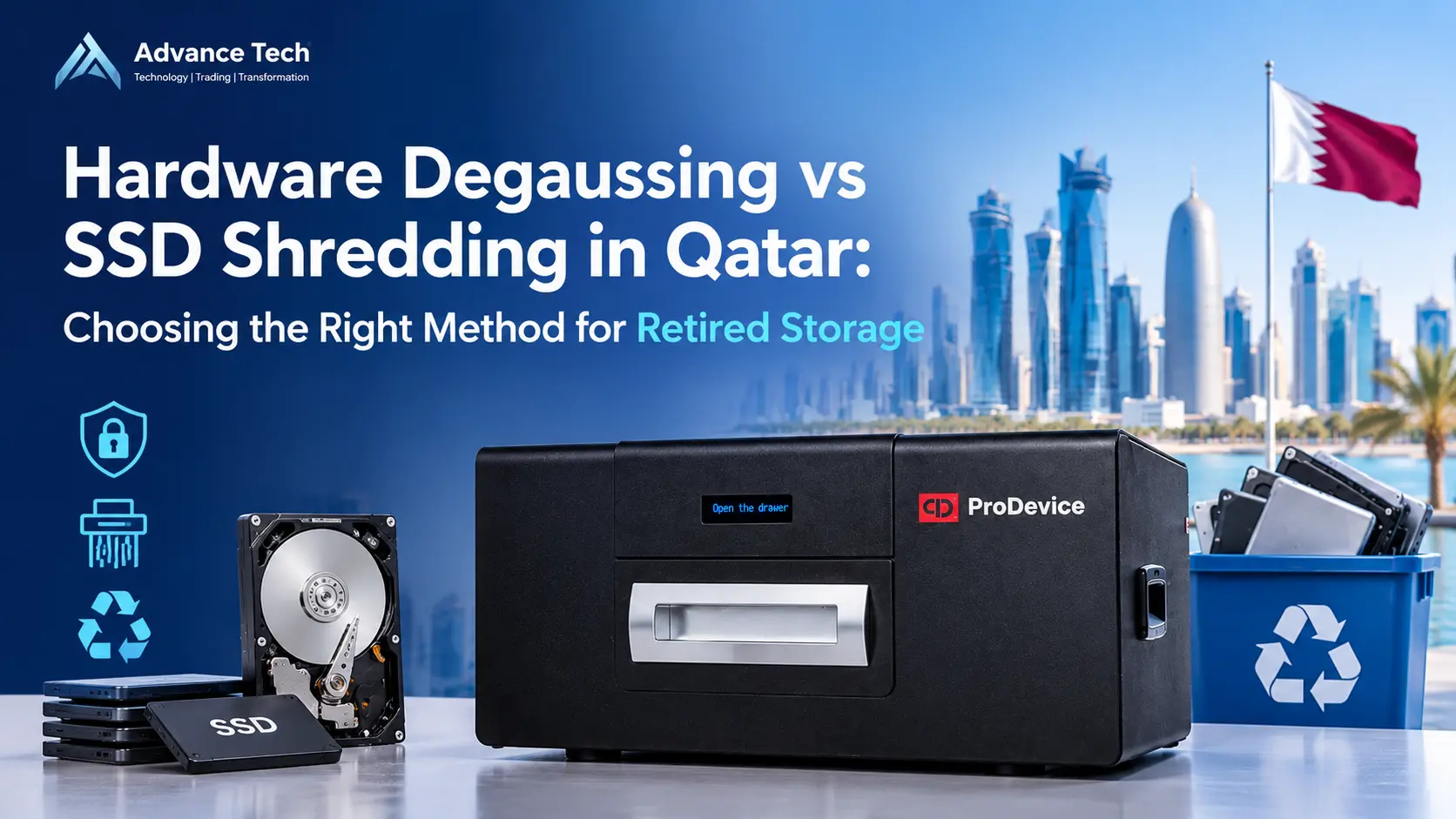
ProDevice lists the ASM240 as a degausser designed for magnetic media. The manufacturer describes a magnetic field of up to 20,000 Gauss, or 2 Tesla, and different product configurations. Before procurement, the buyer should confirm the exact version, supported magnetic media, operating capacity and available reporting options with the supplier.
ProDevice DGX03 for Physical Destruction
The manufacturer presents the DGX03 as an industrial shredder for supported storage media, including certain hard drives and server drives. It can also work with the ASM240 in an integrated workflow for magnetic media. Any proposed use with SSDs or other flash devices should be confirmed against the exact machine specification and the customer’s required destruction outcome.
Other ProDevice Media Destruction Options
The ProDevice range also includes shredders and specialized destruction equipment for different applications. Buyers should not assume that the same cutter, configuration or media capability applies across all models. The equipment shortlist should be based on the quantity and physical format of the devices to be processed, alongside required documentation and facility constraints.
Building an Accountable Media Disposal Workflow
Whether a company processes a small group of retired laptops or a larger data centre refresh, traceability matters. Start with an inventory showing the asset identifier, media type and intended disposition. Keep media under controlled custody until the approved process is complete. Record the sanitization or destruction method, the date, the operator and the result.
The available reporting functions vary by equipment model and configuration. Where automatic logs, photographs or certificates are required, request a sample report and confirm exactly what is generated. A document called a certificate does not by itself establish independent certification or legal compliance.
Questions to Ask Before Buying a Degausser or Shredder
Ask which storage media are supported, including 2.5-inch and 3.5-inch drives, enterprise server drives, SSD modules, tapes and removable flash media. Check the required throughput, device dimensions, power supply, operating conditions and maintenance needs. For degaussers, confirm magnetic media compatibility and the rated magnetic field. For shredders, confirm output characteristics and the applicable technical standard or testing evidence.
Also ask how the proposed workflow will handle devices that cannot be processed, whether records can be linked to an asset number and what operator training is needed. These questions help prevent purchasing a machine that handles only part of the organisation’s retired media.
ProDevice Equipment Supply Through Advance Tech in Qatar
Advance Tech Trading & Contracting W.L.L. supports businesses, government institutions and corporate procurement teams in Qatar with B2B supply of ProDevice equipment. Products are sourced through our dedicated channels for products and distribution on an order-by-order basis according to the requested model, configuration and project requirements. As part of our specialized services in trading in IT products, Advance Tech does not offer ProDevice equipment rental in Qatar.
If your organisation is planning a server replacement, office IT refresh or a dedicated media destruction programme, share the storage types, approximate quantities and required technical specifications with Advance Tech. Our team can help identify suitable ProDevice options for an RFQ and coordinate the relevant manufacturer information.
Frequently Asked Questions
Can a degausser erase SSD data?
No. Degaussing is intended for appropriate magnetic media, not the flash memory used by SSDs.
Does an HDD always need to be shredded after degaussing?
Not automatically. The selected process depends on the organisation’s security policy, media type and required outcome. Some programmes include both methods for magnetic media.
Can all shredders process SSDs and server drives?
No. Media compatibility and destruction results vary by machine and configuration. Confirm the exact model specification before purchasing.
Does buying certified equipment guarantee regulatory compliance?
No. Compliance depends on the applicable requirements and the organisation’s full handling, sanitization, verification and recordkeeping procedures.
Request a ProDevice Equipment Quotation
For a Qatar B2B quotation, contact Advance Tech with your media types, estimated volumes and procurement specifications. We can review suitable ProDevice degaussing and physical destruction equipment options for your project.